
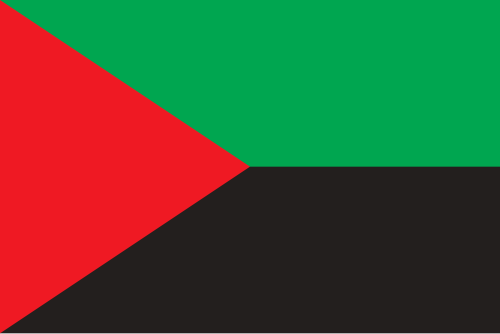
Martinique
Liberty, Equality, Fraternity
About Martinique
Martinique is an island located in the Lesser Antilles of the eastern Caribbean Sea. Politically, it is an Overseas Department and Region of France (Département et Région d'Outre-Mer), making it an integral part of the French Republic and a territory of the European Union (EU).
As a French department, Martinique is fully integrated into the political system of France. It is governed by a Single Local Authority (Collectivité Unique de Martinique), which combines the powers of the regional and departmental councils. The local government consists of an elected Executive Council and a Deliberative Assembly.
Martinique has full representation in the French national government, electing representatives to both the National Assembly and the Senate in Paris. As a part of the European Union, European law applies, and its citizens hold full French and EU citizenship.
Key Dates in History
-
1902
The cataclysmic eruption of Mount Pelée completely destroyed the city of Saint-Pierre, then known as the "Paris of the Caribbean." The disaster claimed roughly 30,000 lives in minutes, leaving only a handful of survivors. Following the catastrophe, Fort-de-France became the island’s new capital and economic hub.
-
1946
Led by influential Martinican intellectual and politician Aimé Césaire, Martinique officially transitioned from a French colony to an Overseas Department (Département d'Outre-Mer). This integrated Martinique politically into France, granting its citizens the same rights, constitutional laws, and voting privileges as residents of mainland France.
-
1983
France passed the Decentralization Acts, which established Martinique as a Region in addition to being a Department. This dual status gave the local government greater autonomy over economic development, culture, and education, allowing the island to better manage its distinct regional Caribbean identity.
-
2010
In a historic local referendum, the people of Martinique voted in favor of merging their separate departmental and regional institutions into a single, specialized territory under Article 73 of the French Constitution. This laid the legislative groundwork for a more streamlined, autonomous local government.
-
2015
Following through on the 2010 vote, Martinique officially inaugurated the Collectivité Territoriale de Martinique (CTM). By merging the regional and departmental councils into a single governing body, this modern political structure designed a more efficient framework for local decision-making and regional diplomacy.
-
2021
Reflecting its deep geographic and cultural ties to its neighbors, the Collectivité Territoriale de Martinique formally presented its application for Associate Membership in CARICOM. This marked a definitive shift toward bridging the institutional gap between the French-speaking Caribbean and the wider regional bloc.
-
2025
At the 48th Regular Meeting of the Conference of Heads of Government of CARICOM in Bridgetown, Barbados, CTM President Serge Letchimy and Barbadian Prime Minister Mia Mottley signed the initial agreement for Martinique’s accession to CARICOM, setting the final diplomatic wheels in motion.
-
2026
The French National Assembly officially approved the bill authorising Martinique’s accession to the Protocol on the Privileges and Immunities of the Caribbean Community, completing the final domestic legislative step required. This historic ratification firmly establishes Martinique as an Associate Member of CARICOM, opening up unprecedented pathways for regional trade, functional cooperation, and climate resilience coordination across the Caribbean.