
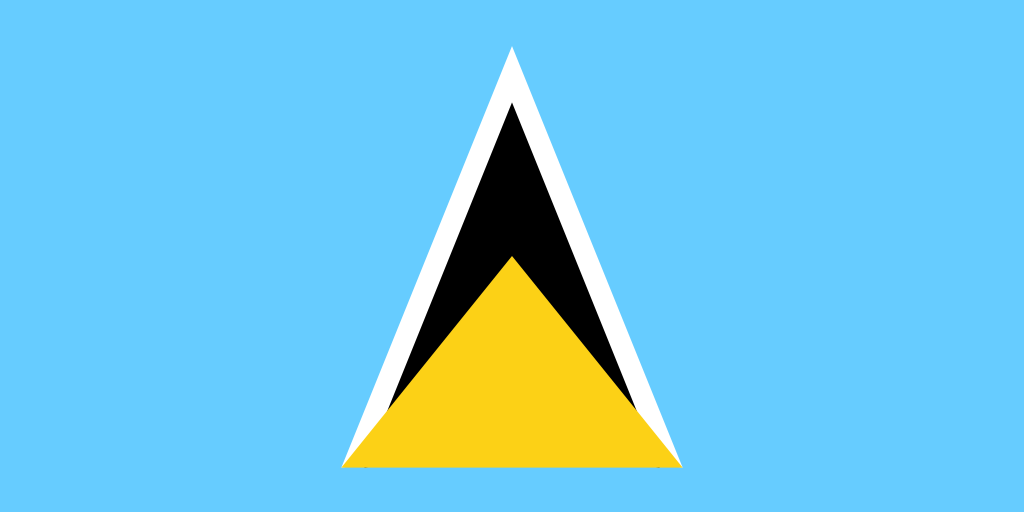
Saint Lucia
The Land, the people, the Light
About Saint Lucia
Saint Lucia is a fertile island nation located in the Caribbean Sea. It lies between the islands of Martinique to the north and Saint Vincent to the south-west. Formed through volcanic activity, the island is characterised by a central mountainous ridge, numerous rivers, and geothermal features such as boiling sulphur springs. Saint Lucia is also bordered by scenic sandy beaches along much of its coastline.
Quasi Cabinet Portfolio Allocation
Sustainable Development (including Environment and Disaster Management and Water)
About Saint Lucia
Key facts
Date of Membership in CARICOM: 1 May 1974 - Learn more about membership in CARICOM
Also Known as:Helen of the West
Status of Independence:Independent 1979/02/22
Area: 616 sq km; 238Mi
Capital City: Castries
Population: 172,034 (2009)
Currency: Eastern Caribbean Dollar (EC$)
Highest National Award: Grand Cross of St. Lucia
Economy
GDP Growth: -0.2% p.a. 2009–13
GNI: US$1.3bn
GNI PC: US$7,090
Key dates in history
1520 Vatican Globe marks island as ‘ Santa Lucia’ suggesting claim by Spain. Amerindians first called
Island ‘louanalao’ (where iguana is found) then ‘Hiwanarau’ and later ‘Hewanoora’
1639 First recorded European settlement (by Britain)
1642 Ceded to French West Indies company by King of France who claimed sovereignty
1814 Island changed hands fourteen times between Britain and France, finally becoming a British
Colony
1838 Incorporated into Windward Islands Federation
1951 Universal Adult Suffrage, George F.L. Charles, first Chief Minister
1958 Joined the West Indies Federation
1967 Associated Statehood with Britain (full internal self-government) within WISA
1979 Independence achieved, John Compton, first Prime Minister
Key Dates in History
-
1968
Saint Lucia joins CARIFTA.
-
1974
Becomes member of CARICOM.
-
1979
Achieves Independence.
-
1989
Participates in Grand Anse Declaration.
-
1997
Supports CARICOM governance reforms.
-
2001
Signs Revised Treaty of Chaguaramas.
-
2005
Participates in CCJ arrangements.
-
2006
Joins launch of the CSME.
-
2016
Expands blue economy and regional sustainability initiatives.
-
2023
Marks continued leadership in regional diplomacy.