
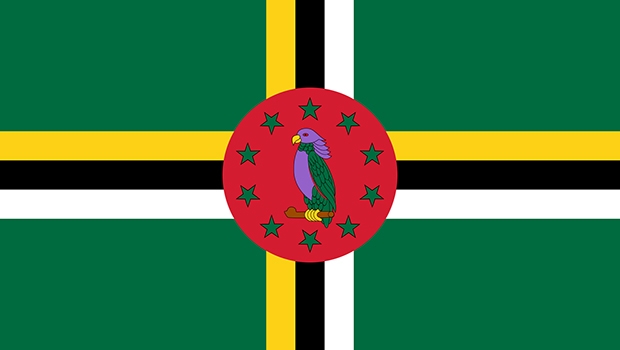
Dominica
After the Good Lord, We Love the Earth
About Dominica
Dominica is a small and fertile island nation located in the eastern Caribbean Sea. It lies between the French islands of Guadeloupe and Marie-Galante to the north and Martinique to the south. Formed through volcanic activity, the island is characterised by rugged terrain, with a range of high mountains covered in dense tropical forests. Dominica also remains volcanically active, with several geothermal features and active volcanic systems.
Quasi Cabinet Portfolio Allocation
Labour (Including intra-Community Movement of Skills)
About Dominica
Key facts
Date of Membership in CARICOM: 1 May 1974
Also Known as:Nature Island of the Caribbean
Status of Independence:Independent 1978/11/03
Area: 750 km2 (290 miles2)
Capital City: Roseau
Population: 71,898 (2009)
Currency: Eastern Caribbean Dollar
Highest National Award: Sisserou Award of Honour
Economy
GDP: EC$771.0 Mn (2004)
GDP Growth: –0.5% p.a. 2009–13
GNI: US$493m
GNI PC: US$6,760
GDP per Capita: EC$11,045 (2004)
Key dates in history
1493 Arrival of Columbus on island called Wai’tukubuli’ (tall is her body) by Caribs and Arawaks. Named Dominica Spanish translation of Sunday (Domingo)- the day Columbus first sighted the island
1660 Agreement between Britain and France to leave island to the Caribs
1783 Finally ceded to Britain following numerous exchanges between Britain and France
1871 Incorporated into Leeward Islands Federation
1939 Transferred from Leeward to Windward Islands Federation
1967 Associated Statehood with Britain (full internal self-government) within the West Indies Associated States (WISA) Edward Oliver Lablanc, first Premier
1978 Independent Republic within the Commonwealth. Patrick John, first Prime Minister
Key Dates in History
-
1968
Dominica joins CARIFTA.
-
1974
Becomes member of CARICOM
-
1978
Achieves Independence
-
1989
Supports Grand Anse Declaration
-
1989
Participates in Charter of Civil Society process
-
2001
Signs Revised Treaty of Chaguaramas.
-
2005
Supports CCJ implementation.
-
2006
Participates in CSME launch.
-
2017
Leads regional climate resilience advocacy after Hurricane Maria
-
2023
Continues leadership in climate diplomacy within CARICOM.